|
The Hot, Hard Truth: Habitual Mistakes and Preventable Fire Causes in the State of Wisconsin By: Don VanOss, Midwest Consulting & Associates, LLC I. Introduction Fires across Wisconsin often originate from ordinary, everyday activities that most people never imagine could lead to disaster. The prevailing mindset—“It won’t happen to me”—continues to fuel preventable losses across the state. Over the past two decades, Midwest Consulting & Associates, LLC (MCA) has conducted thousands of fire investigations throughout Wisconsin. Drawing from this extensive experience, MCA has compiled and analyzed a dataset of fire causes from 2004 through 2024, with this article focusing on the most accurate and verifiable data collected between 2017 and 2024. The goal of this article is to assist claim representatives and attorneys in the litigation process who are presented with fire claims. Using data collected across all regions of the state, this article provides a statistically meaningful, geographically diverse overview of the leading fire causes. The results can serve as a practical reference for insured homeowners, insurers, and counsel seeking data-driven insights into fire prevention and preparedness. While national standards and classification systems for fire causes exist, this paper intentionally uses terms and categorizations that are straightforward, relatable, and understandable to the general public. By bridging technical accuracy with public accessibility, MCA aims to transform fire investigation findings into actionable knowledge that reduces risk and saves lives. From an insurance and investigative standpoint, the data indicates that most fires show no evidence of arson, liability exposure, or subrogation potential. This finding underscores a critical need for improved internal insurance investigations and for greater collaboration between the private and public sectors to share verified information. Ultimately, fire prevention begins with education and transparency. The causes presented in this study, ranging from cooking and smoking to heating, electrical, and natural events, reflect real and preventable incidents. MCA believes that the responsibility to prevent future fires lies not only with the public but also with those tasked with educating it. The greatest failure is not negligence itself, but the lack of shared knowledge that allows it to persist. II. Overview Founded in 2004, MCA has completed thousands of fire investigations across the Midwest under the leadership of Don VanOss, Owner and Lead Investigator. The data collected and analyzed since 2017 was gathered with the assistance of Adam Vogelsang, CFI, of Forensetec, Inc. Each investigator independently reviewed every fire claim. A qualified fire investigator applies a systematic and scientific approach to determine both the origin and cause of a fire. This process requires a comprehensive understanding of fire dynamics, building construction, and ignition sources. In addition, strong knowledge of legal procedures, fire codes, and reporting standards, along with the ability to serve as an expert witness in court, are essential skills that distinguish a professional investigator. Throughout thousands of investigations, MCA has identified a significant lack of public awareness of the most common causes of fires. It is concerning that findings from private-sector investigations are often kept secret, limiting opportunities for public education and prevention. The goal of any fire investigation should extend beyond identifying the cause; it should also contribute to public knowledge and help prevent similar incidents. While many fires are attributed to homeowner negligence, MCA believes greater accountability lies with the investigative and educational systems. Investigators who have conducted countless examinations have not collectively provided a centralized, data-driven resource identifying common fire causes. In this regard, the responsibility rests more with the educator than the uneducated. III. Existing Data Gaps and Reliability Fire departments, particularly volunteer-based agencies, play a vital role in collecting data on fire causes and prevention. However, many lack the specialized training, education, and experience necessary to conduct scientifically sound investigations or provide reliable findings. MCA advocates for stronger collaboration between the private and public sectors to bridge these knowledge gaps and ensure the public receives accurate, actionable information. Data accuracy remains a persistent challenge in both public and private fire investigation sectors. In many cases, inadequate training and failure to adhere to the scientific method result in inconsistent or unreliable reporting. The scientific method for fire investigations is outlined in the National Fire Protection Association (NFPA) 921 Handbook. This article shows the process of this method. Another factor influencing data reliability is the financial incentive structure inherent in private investigations. Independent investigators often represent clients pursuing or defending subrogation claims. In a profit-driven environment, insurers may feel the need to keep investigative results confidential, and thus, many causes may not be made available to the public. A rapid and well-coordinated response following a fire loss is essential. Prompt arrival at the scene allows investigators to secure the origin area, preserve evidence, and initiate timely mitigation efforts elsewhere. However, pressure to reach quick conclusions, often driven by scheduling or restoration demands, can lead to premature determinations that compromise the accuracy of origin and cause analysis. IV. Methodology For over two decades, MCA has gathered extensive data on numerous factors related to fire investigations. To identify the most common causes of structural fires across Wisconsin, MCA conducted an in-depth review of eight years of investigation reports, encompassing more than 1,200 individual fire incidents. This dataset, collected between 2017 and 2024, constitutes a statistically representative sample for analyzing fire trends in the state. Each case record includes specific variables such as year, quarter, location, and the determined cause of the fire. These data points provide valuable insight into when and where structure fires are most likely to occur, information that can be instrumental in shaping effective prevention and public awareness strategies. The State of Wisconsin experiences an average of 3,000 to 4,000 structure fires annually. Fire risk levels vary considerably based on geographic, demographic, and structural factors. To ensure more precise regional analysis, MCA divided the state into four geographic quadrants: Northwest, Northeast, Southwest, and Southeast. This segmentation allows for a more detailed examination of how population density, housing characteristics, and socioeconomic conditions influence fire occurrence patterns. A foundational understanding of these variables enables several general observations:
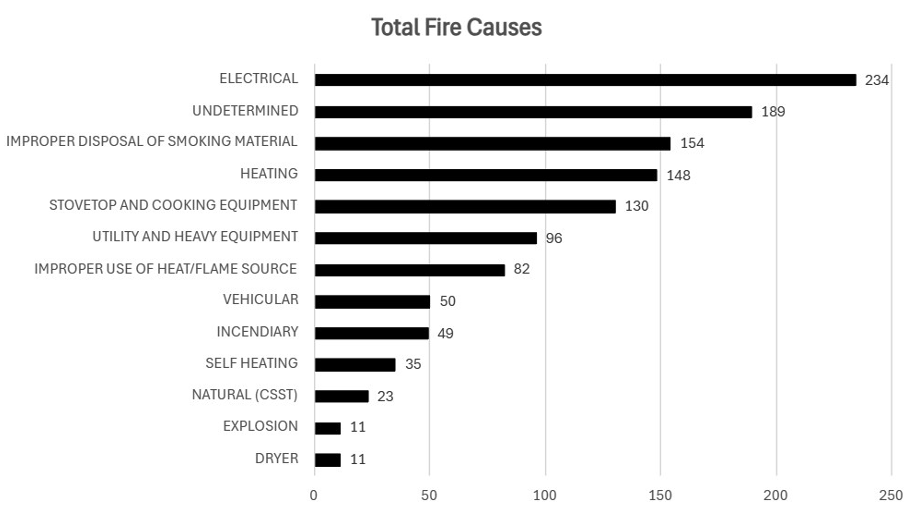
This methodological approach ensures that MCA’s findings are grounded in both empirical data and regional context, providing a comprehensive basis for identifying trends and supporting statewide fire prevention initiatives. V. Results The data collected over the past eight years indicate that most fires are accidental and caused by negligence or carelessness. As with any accident, fires are largely preventable with proper training. Unfortunately, this education often comes in hindsight rather than in advance. As detailed in the previous section, common fire causes varied by geographic region across the state and by time of year. The table below summarizes the total number of fires by cause category, representing a total of 1,212 fires.
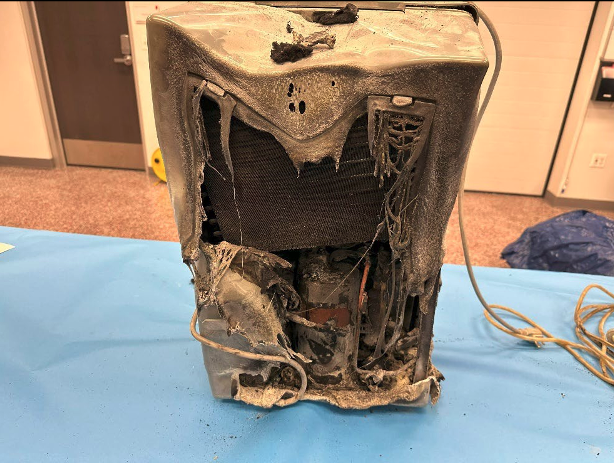
The most common causes of fire identified in the collected data are presented in the following sections. As demonstrated, many fires originate from routine activities that are often overlooked by the general public. Each cause includes recommendations for preparedness, prevention, and key actions to reduce overall fire risk. a. Electrical Electrical fires are often the first type of fire the public considers, and this perception is not without merit. Throughout MCA’s tenure, members of the public have often asked whether a fire was caused by an electrical issue or by arson, two causes that are among the most widely recognized by the general public. Additionally, MCA has encountered situations in which volunteer and career fire chiefs state they do not know the cause of a fire. Yet the incident is labeled as electrical rather than undetermined. In many of these cases, there is little or no physical evidence to support an electrical cause. When this occurs, fire cause statistics can become skewed, placing increased emphasis on electrical fires when other ignition sources or contributing factors may have been involved. Of the 1,212 fires investigated by MCA between 2017 and 2024, nearly 20% were deemed electrical in nature, representing the highest percentage of fire causes identified in the dataset. The elevated percentage is not entirely unexpected, as electricity can be difficult to definitively exclude as an ignition source. As a result, electrical causes are often assigned based on circumstantial indicators such as witness statements, damaged wiring, or the presence of an electrical device within the area of origin. While these indicators often suggest electrical involvement, they do not always confirm that electricity itself was the root cause of ignition. Many fires classified as electrical involve underlying issues related to misuse, maintenance, or environmental factors rather than a failure of the electrical system alone. For example, an overloaded extension cord represents improper use of electricity, not an inherent electrical defect. Similarly, a toaster fire may be categorized as electrical, yet ignition often results from accumulated debris, lack of maintenance, or internal mechanical failure. These distinctions are important for insurers, adjusters, and the public alike, as accurate cause determination directly influences loss-prevention strategies and risk-mitigation efforts. Approximately one-fifth of the electrical fires in the dataset were classified as “electrical–general.” In these cases, the area of origin contained electrical components or conditions consistent with electrical involvement; however, a specific ignition source, such as a device, appliance, or wiring failure, could not be positively identified. Electrical involvement could not be ruled out, but the available evidence did not support classification into a more specific electrical subcategory. Despite these complexities, MCA’s investigation data consistently identify electrical-related fires as a major contributor to fire incidents throughout Wisconsin. Frequently observed ignition sources include lithium-ion batteries, dehumidifiers, extension cords, aging or deteriorated wiring, damage caused by rodents, and other electrical appliances. Understanding not only what is labeled an electrical fire, but also why those fires occur is critical for improving fire prevention practices, guiding safer consumer behavior, and ultimately reducing the risk of future fire losses and injuries. i. EV and Lithium Batteries An emerging cause of fires is the increased use of lithium-ion battery devices and components. Of the 234 total electrical fires, nearly 18.38% were caused by lithium-ion batteries, with the majority occurring in the last few years. The recent issues associated with lithium-ion batteries are beyond the scope of this article. However, lithium-ion batteries do not have the same mechanical integrity as standard cell batteries. Many lithium-ion battery failures result from damage to the battery pack, overcharging, charging at extreme temperatures, manufacturing defects, or other related causes. Often, simply using the wrong charger is the issue. MCA has identified several lithium-ion battery fires in which the use of an incompatible charger was a contributing factor. In many cases, chargers appear similar to the correct charger for a given battery pack, leading to improper use. It is important to ensure the charger is identical and manufacturer-approved, as differences in voltage or current requirements can cause overheating and ultimately result in thermal runaway. Overcharging, physical damage to the battery pack, or internal defects can trigger thermal runaway, leading to rapid heat release, fire, or explosion. Lithium-ion battery technology is still relatively new compared to traditional electrical and mechanical systems, and its long-term performance characteristics are not as well understood or as extensively studied in real-world fire scenarios. As use continues to expand across consumer, commercial, and industrial applications, ongoing investigation and data collection will be critical to understand failure mechanisms better and reduce the fire risks associated with this technology. ii. Dehumidifiers Another common worldwide source of electrical fires, including in Wisconsin, is dehumidifiers, which accounted for approximately 16.2% of the electrical fires identified in the Wisconsin dataset. There have been thousands of dehumidifier recalls, with many attributed to manufacturing defects rather than electrical malfunctions.[1] These incidents highlight how widely used household appliances, particularly those operating for extended periods and often unattended, can present significant fire risks. Increased awareness of recall information, proper maintenance, and discontinuing use of recalled or damaged units may significantly reduce the likelihood of dehumidifier-related fires.
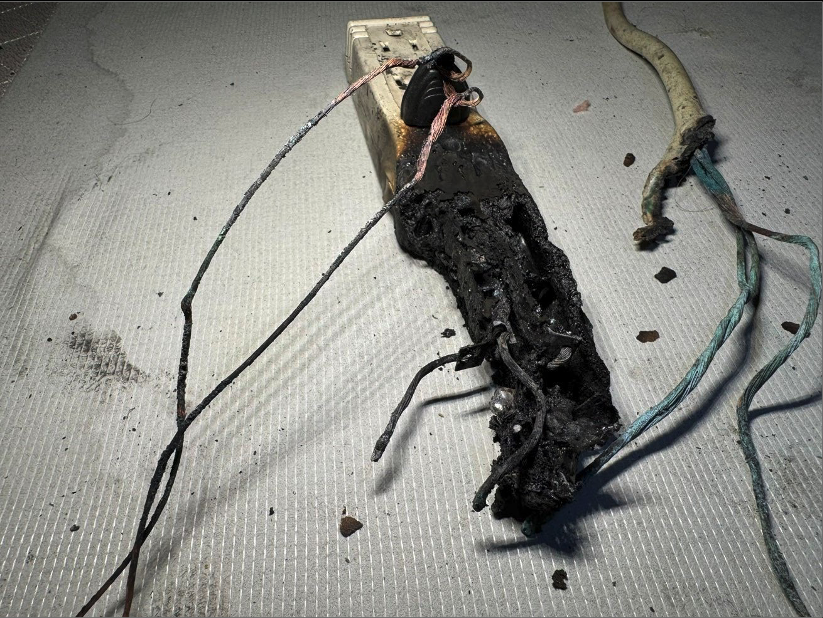
iii. Extension Cords and RPTs One of the most common errors associated with extension cord use is its application as a substitute for permanent wiring rather than for temporary purposes. Extension cords are designed for short-term use and should be unplugged when not actively in service. While their convenience is widely recognized, prolonged or improper use has been associated with significant property damage. Extension cords must be properly matched to the electrical load of the appliance or power tool being supplied. Standard residential branch circuits typically utilize 12 or 14-gauge conductors. When an extension cord with a smaller-gauge conductor is used, it can become overloaded, resulting in excessive internal heating and an increased risk of fire. In these situations, circuit protection devices designed for fixed 12 or 14-gauge wiring may not detect an overload and may fail to trip before ignition occurs. Improper placement of extension cords further increases fire risk. Cords that are coiled, pinched, or routed beneath rugs, furniture, or shelving can sustain physical damage and restrict normal heat dissipation associated with current flow. This restriction can lead to localized heat buildup and eventual failure of the cord insulation. RPTs, commonly known as power strips or surge protectors, raise similar concerns. Although convenient, they are frequently overloaded and misused. RPTs are not intended for permanent installation and should be de-energized when not in use. Improper or continuous use significantly increases the likelihood of overheating and fire.
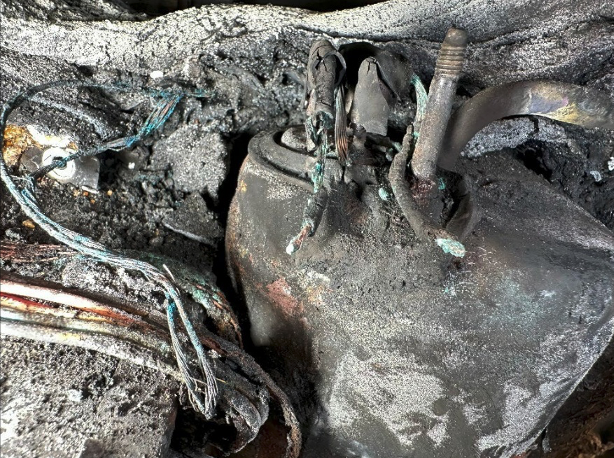
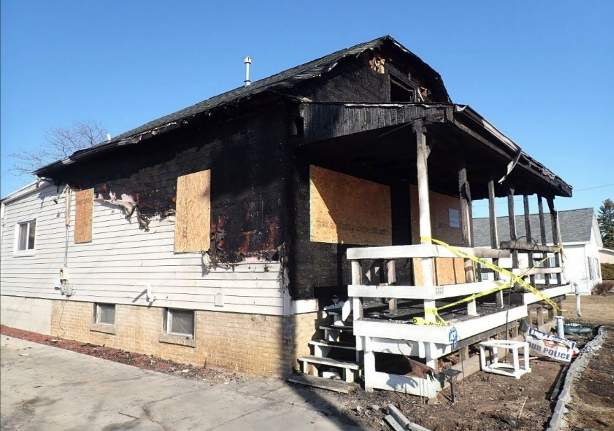
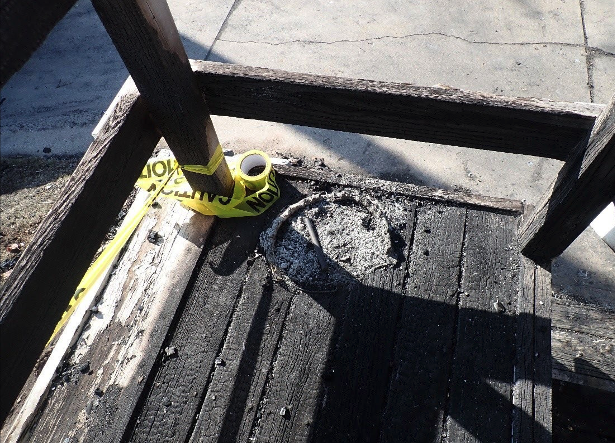
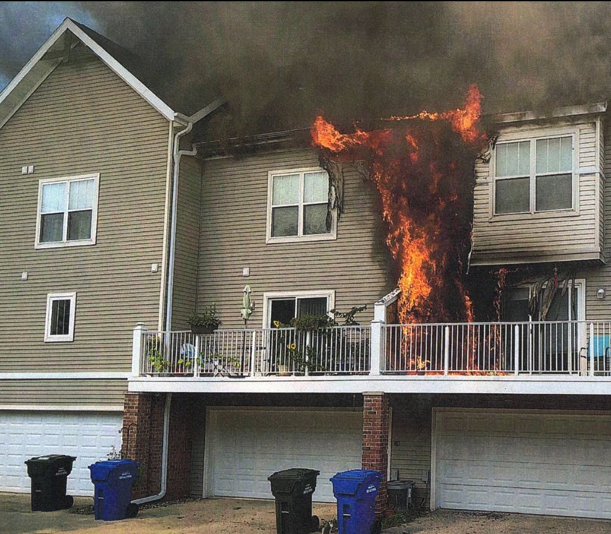
For added safety, undersized extension cords should be avoided. Electrical breakers are not designed to detect overloaded extension cords, as the cord itself becomes the point of failure rather than the circuit. Extension cords should remain exposed to ambient air and not be covered by furniture, rugs, or carpeting. Extension cords and RPTs are intended for temporary use and should not be relied upon as permanent electrical solutions. Within MCA’s dataset, approximately 12% of all electrical fires were attributed to extension cords and RPTs. iv. Rodents According to some sources, there are as many as 10,000 confirmed rodent-caused fires in the United States every year. MCA has experienced several rodent-caused fires, with nearly 4% of electrical fires in the dataset linked to rodents. While this may seem like a small percentage, the damage caused by rodents can be sudden and severe, often affecting multiple circuits or hidden wiring within walls, attics, or crawl spaces. In a recent 2024 fire, an MCA fire investigation revealed a large rodent nest near an older circuit board and wiring. Rodents such as mice, rats, and squirrels gnaw on electrical wiring, damaging or completely removing the insulation around conductors. Once the insulation is compromised, exposed wires can touch each other or nearby conductive materials, creating electrical arcs. These arcs generate intense heat that can ignite surrounding combustible materials, such as wood framing, insulation, or stored items. Fires caused in this manner often start in concealed locations, making them particularly dangerous and sometimes difficult to detect until they have progressed. If rodent activity is identified within a residence or structure, appropriate eradication and prevention measures should be implemented promptly. This includes sealing entry points, maintaining proper sanitation, and, when necessary, using traps or professional pest control services. Addressing rodent problems early not only protects property but can also significantly reduce the risk of potentially devastating electrical fires. b. Improper Disposal of Smoking Material The data shows that approximately 12.7% of the 1,212 analyzed fires were caused by improper disposal of smoking materials, primarily cigarettes. An unventilated lit cigarette can reach temperatures of roughly 750°F, while a ventilated cigarette tip can glow up to 1,100°F during a puff. Most smoking-material fires occur because cigarettes are not fully extinguished. They are often discarded in plant holders filled with dry vegetation or in modified ashtrays. Many people assume that burying a cigarette in soil is sufficient to extinguish it, but dry vegetation within the soil, particularly when not consistently watered, can ignite. Smoking-related fires most commonly occur on exterior decking at homes and apartments. Since the 2010 smoking ban in bars and restaurants, smoking material-related fires have occurred most often on the front or back steps of the exterior rather than in the garbage containers behind the bar. It was common practice to empty ashtrays into the garbage before the ban, which led to many internal bar fires. These smoking material fires frequently result in significant property damage and, in some cases, fatalities. Fires can spread rapidly when exposed to outdoor elements, especially wind, and smoke detectors are often absent in these locations. Many people do not fully appreciate the hazards of improperly extinguished smoking materials. Smokers, like anyone else, are creatures of habit. Most of the time, an improperly discarded cigarette does not ignite a fire. However, the chemical conditions for ignition are present whenever combustible material is consistently exposed to a lit cigarette without adequate means of extinguishing it. To prevent fires from smoking materials, it is critical to fully extinguish cigarettes and other smoking materials before disposal. Ashtrays should be deep, stable, and filled with sand, water, or other non-combustible material. Cigarettes should never be discarded in plant holders, dry soil, mulch, or other combustible materials. When outdoors, ensure that smoking materials are completely out and cool to the touch before leaving them unattended. Regularly empty and maintain ashtrays to prevent the accumulation of embers and consider using metal or ceramic containers designed for the disposal of smoking materials. By following these simple precautions, the risk of ignition from smoking materials can be substantially reduced, thereby protecting both property and life. The photographs below depict a fire that occurred when a plastic-modified ashtray was used on the front porch of a residential property:
The fire represented in the photograph below was caused by a cigarette discarded into a planter filled with dry vegetation. The uninsured tenant routinely extinguished his cigarettes in the potted plant, creating a consistent ignition hazard.
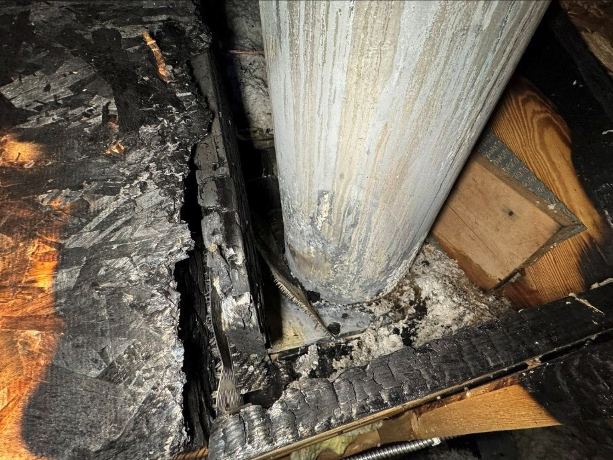
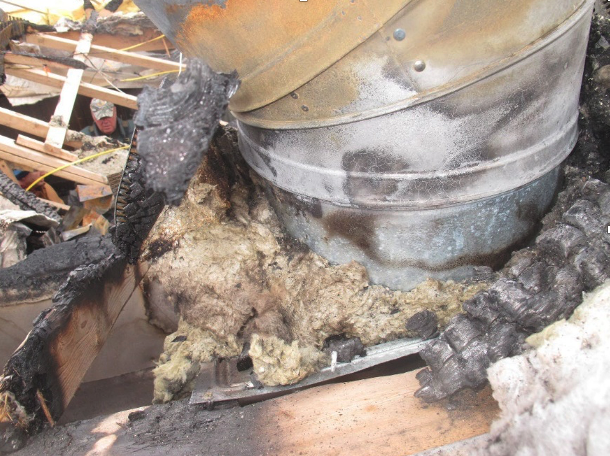
c. Heating Wisconsin experiences several cold months during which heating appliances are used for extended periods. Within the dataset, just over 12.2% of fires were heating-related, and of the 148 total heating fires, approximately 72% occurred between October and March. The data indicate that wood-burning fireplaces and space heaters are more frequently involved in household fires than other heating systems. Home heating appliances are often more diverse than a standard basement forced-air furnace, the least likely type to cause a cold-weather fire. Contrary to popular belief, most chimney fires are not caused by creosote or soot buildup inside the chimney. Instead, the majority result from insulation or other combustible materials contacting the exterior of the chimney pipe. Metal chimneys, which are commonly used, are either air-cooled or insulated between the pipe walls, thereby reducing the likelihood of creosote accumulation within the chimney. The most common cause of chimney fires is inadequate clearance from combustibles. This is typically due to missing or improperly installed insulation shields or insulation inadvertently contacting the flue pipe. Many incidents occurred in new construction or remodels where insulation was either installed in direct contact with the pipe or blown over the top, creating a combustible path.
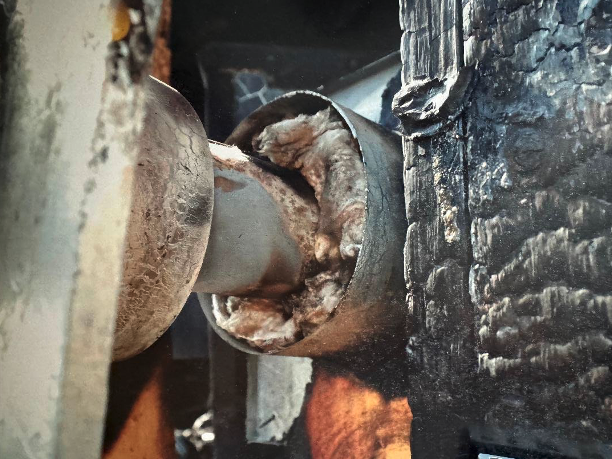
The photo above shows insulation within the space where the chimney pipe passes to another level of the home. An attic insulation shield is required in this area, from the top of the firestop to approximately eighteen inches above the pipe, to prevent the insulation from contacting the pipe. In this fire loss, the flue pipe installer was responsible for installing the shield. The insulation contractor should have inspected this and any other areas where chimney flue pipes or other heat-producing items, such as recessed lighting, were present to ensure that no insulation was in contact with these heat sources. Similarly, the photographs below depict a fire associated with a pellet stove. The cause was improper installation inside the thimble. By design, a thimble must maintain an air space to prevent any building materials, including insulation, from contacting the flue pipe. The installer, a licensed contractor, claimed that the installation was acceptable; however, it did not meet required safety standards, resulting in a fire that endangered the home and its occupants.
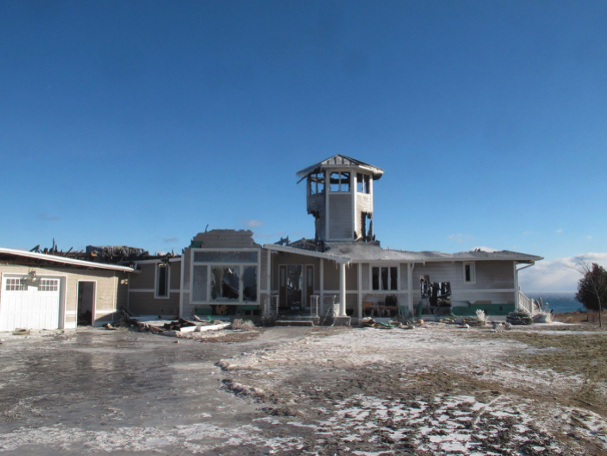
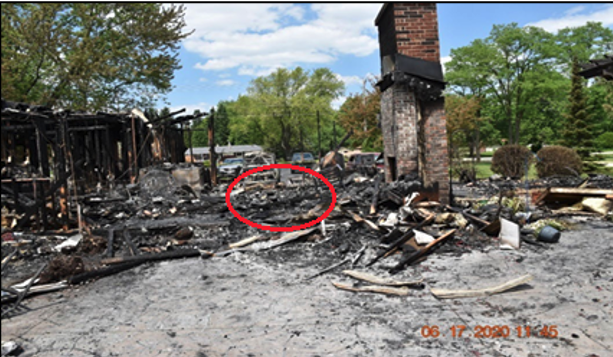
The photographs below show a multimillion-dollar home that was a total loss after insulation came into contact with the chimney flue pipe.
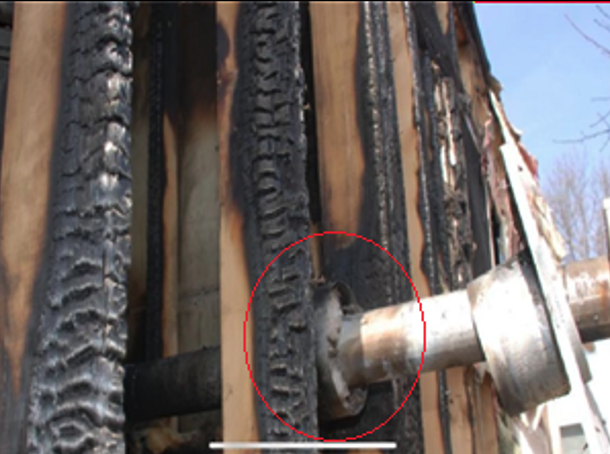
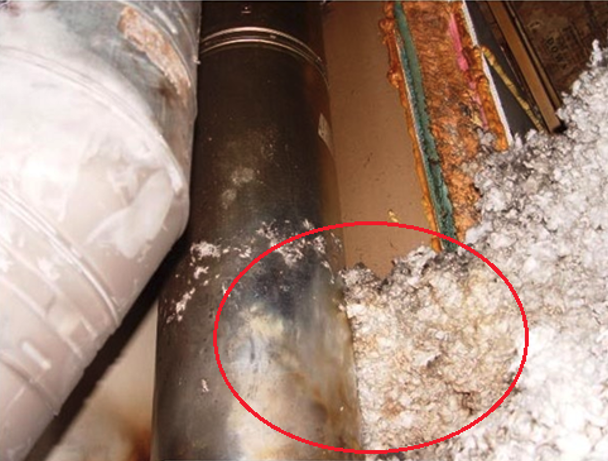
In another heating-related fire, a contractor installed chopped fiberglass insulation, stating to MCA that its placement was acceptable because it was “non-combustible.” Note the thermal patterns on the exterior of the pipe in the photograph below, visible within the circle. Similar to the previous photographs, these patterns show elevated temperatures that compromise the required clearance and allow conductive heating, creating a significant fire hazard.
Another common cause of heating-related fires that MCA has encountered over the years is the improper disposal of fireplace or firebox ashes. Similar to fires caused by improperly discarded smoking materials, many of these incidents result from ashes or embers not being fully extinguished before disposal. Although the surface of an ash pile may feel cool to the touch, the interior can remain extremely hot due to its insulating properties. Ashes should be fully spread out or thoroughly doused with water before disposal. Simply adding a layer of water to the top of a container, such as a plastic bucket, can actually trap heat inside, sometimes melting the container and igniting nearby combustibles. Proper extinguishing and safe disposal are critical to preventing such fires. Here are some preventative actions that can be taken to reduce the risk of heating-related fires:
d. Stovetop and Cooking Equipment Nearly 11% of all fires investigated during the research period were caused by stovetop or cooking-related activities. While these incidents are generally classified as cooking fires, only a small portion are formally attributed to specific cooking appliances or actions. Most people are familiar with the typical grease fire. Still, MCA’s investigations show that the majority of stovetop fires result from three key factors:
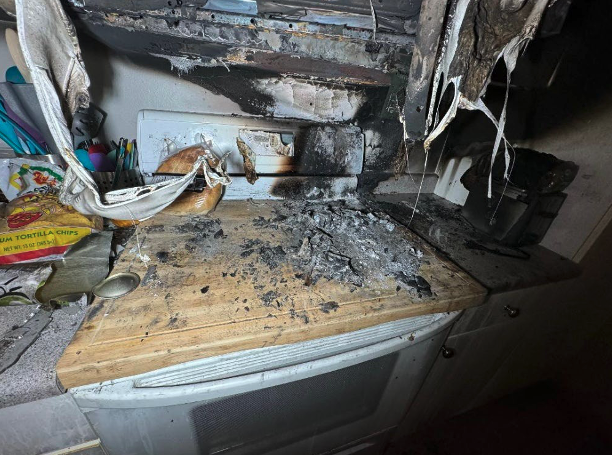
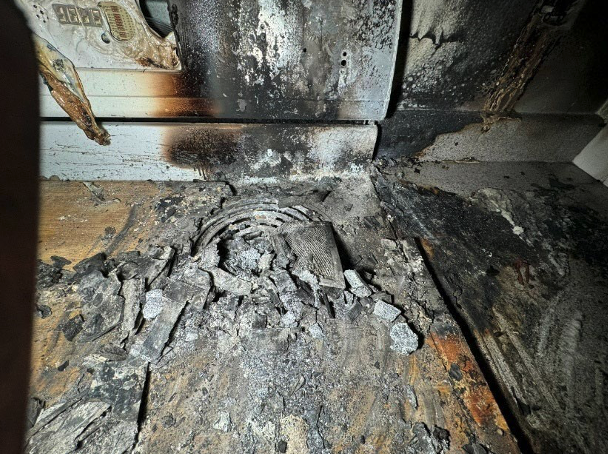
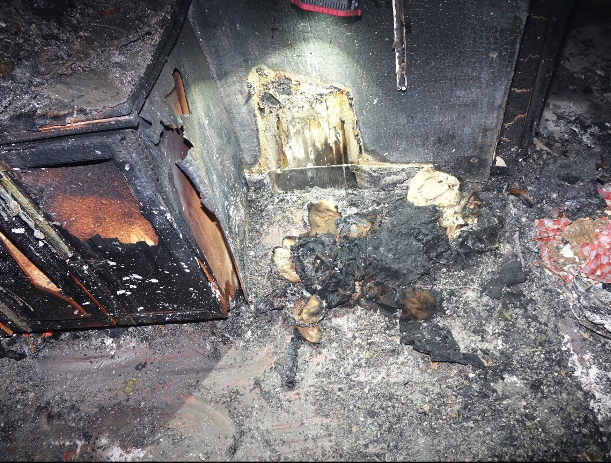
Simple household habits can greatly reduce the risk of stovetop fires. Avoid using the stovetop as a countertop for storage, keep combustible materials at least fifteen to eighteen inches away from the sides and top of burners, and always double-check that burners are turned off after cooking. By adopting these basic precautions, homeowners and occupants can significantly reduce their risk of a preventable, potentially tragic stovetop fire. MCA has observed a troubling trend of homeowners using their stovetops as counter space. A quick search on Amazon for “stovetop cover board” reveals numerous options, including wooden boards designed to sit on top of a stovetop when it is not in use. The problem is that placing any combustible material directly over a potential ignition source creates a serious fire hazard and significantly increases the risk of a preventable stovetop fire. The board increases counter space, but the photographs below show exactly what happens when a burner is accidentally turned on with the board in place. This fire was caused by the homeowner accidentally turning on the back burner knob when placing grocery bags against the back panel.
e. Improper Use of a Heat/Flame Source Candles, fireworks, outdoor burning, and welding or torching activities accounted for roughly 6.8% of fire causes in MCA’s dataset. Of the 82 fires in this category, just over 35% were caused by candles. Before using candles in the home, it is important to perform a simple risk-versus-reward evaluation. According to the National Fire Protection Association:[2]
A study by the U.S. Consumer Product Safety Commission suggests that up to 85% of candle fires could be prevented if consumers followed three basic safety rules:
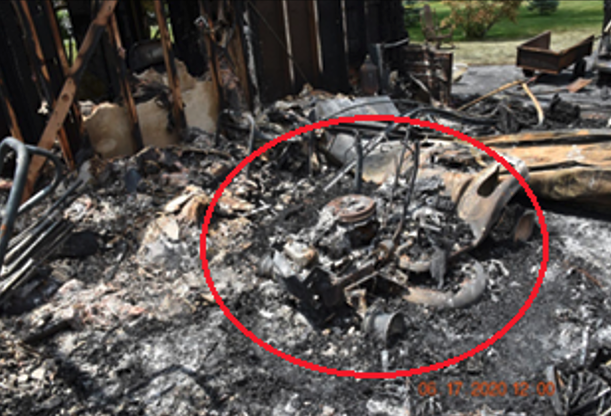
Candles can create a pleasant atmosphere, but their use carries real risk. By following these simple precautions, homeowners can significantly reduce the likelihood of injury, property damage, or a tragic fire. f. Utility and Heavy Equipment MCA investigated 96 fires classified as related to utility- or heavy-equipment. Approximately 66% of these occurred in Wisconsin’s northeastern and northwestern regions, where logging, brush cutting, and other heavy-equipment operations are common. These incidents also involve residential and utility equipment, such as lawn mowers, riding tractors, snowblowers, and utility vehicles. The combination of mechanical systems, combustible fuels, and outdoor environments creates conditions where ignition can occur if proper precautions are not followed. Common contributing factors include overheating engines, fuel or hydraulic leaks, electrical system failures, and debris build-up. Fires can spread rapidly in areas with dry grass, brush, mulch, or accumulated debris, particularly during periods of low moisture. Residential equipment, such as lawnmowers or riding tractors, can ignite fires when combustible materials, such as grass clippings or leaves, accumulate near hot engine components or exhaust systems. MCA has examined several homes that sustained severe damage due to use of riding lawnmowers. In most cases, the fires were caused by dry vegetation accumulating on the mower deck and within the engine compartment. A critical factor in these incidents was that the mowers were parked inside garages immediately after use. For a short period following the operation, the engine remains at its highest temperature. Equipment should be allowed to cool and remain parked away from combustible materials for at least ten minutes before being placed in a garage or shed. Homeowners should routinely clear equipment decks, cutting blades, and surrounding areas of debris and combustible materials. Fire extinguishing equipment should be readily accessible. By following these precautions, the risk of fire associated with utility and heavy equipment can be significantly reduced. The incident shown in the photographs below involved a witnessed fire that originated at the riding lawnmower shortly after it was parked inside the garage. The mower had been operated for more than two hours in tall, dry grass and was driven directly into the garage after use. The photographs illustrate the extensive damage caused by this otherwise preventable mistake.
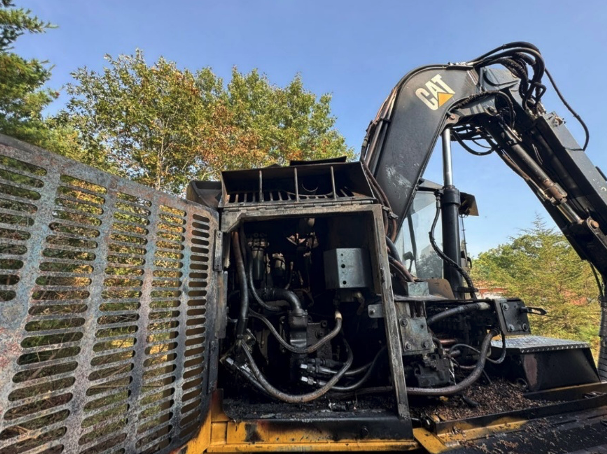
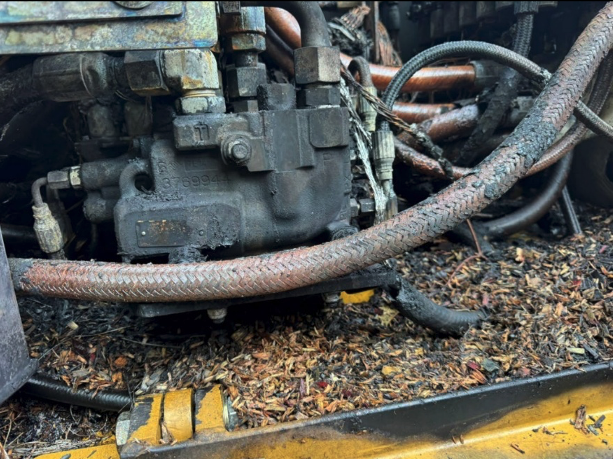
MCA found that a significant number of heavy-equipment fires involving logging and farming machinery were attributable to inadequate maintenance and the accumulation of dry vegetation contacting the exhaust system. Many of these fires originated in the exhaust, particularly on equipment with horizontal exhaust configurations, where wood chips and other debris can readily accumulate. While production demands are understandable, the lack of routine cleaning within the engine compartment remains a leading cause of heavy-equipment fires. Preventive measures are essential for both industrial and residential equipment. Regular maintenance, including inspection of fuel lines, electrical wiring, hydraulic hoses, and engine components, can substantially reduce the risk of failure. Cleaning the exhaust system and surrounding areas is critical for fire prevention. Although stopping production to clean equipment during a shift may seem counterproductive for farmers and loggers, practical solutions exist. Based on field experience, keeping a small leaf blower readily available and taking breaks to inspect and clean the engine compartment, particularly near the exhaust, is an effective and reasonable preventive practice. In the photographs below, the logging harvester experienced a fire in the engine compartment due to inadequate maintenance. In the second photograph, a large accumulation of wood chips and debris is visible.
g. Other Common Causes Other common causes of fire were identified in the dataset, though in smaller numbers. Although these fire causes are less frequent than those discussed above, they collectively accounted for nearly 15% of the dataset. i. Vehicular (4.1%) Fires involving cars, trucks, and other vehicles are often caused by mechanical or electrical failures, fuel leaks, or overheating components. These fires can occur both on public property and in residential garages. Prevention Tip: Maintain vehicles regularly, inspect fuel lines and wiring, and store nearby combustible or flammable materials safely. ii. Incendiary (4.0%) The general public often perceives arson to be far more prevalent than it actually is; however, incendiary fires are relatively uncommon in Wisconsin. Among intentionally set fires, 51% occurred in the southeastern quadrant of the state, primarily in and around Milwaukee. These fires often involve residential or commercial structures and can start in hidden or hard-to-access areas. Prevention Tip: Install security measures, maintain awareness of suspicious activity, and secure combustible materials to reduce opportunities for intentional ignition. iii. Spontaneous Combustion & Self-Heating (2.9%) The term spontaneous combustion or self-heating is used because these incidents typically occur without an external or obvious ignition source. Instead, heat is generated internally by chemical reactions within the materials. Oil-based paints, stains, and varnishes are particularly hazardous because they oxidize and generate heat, especially when rags or other absorbent materials are piled, compressed, or confined. Through investigations and field experience, MCA has encountered even seasoned professional painters and stainers who report routinely disposing of used staining rags in bags or buckets without incident. However, documented cases demonstrate that ignition can and does occur under these conditions. Additionally, many members of the public perform similar work without professional training or awareness of these hazards. Prevention Tip: Rags or materials contaminated with oil-based products or animal byproduct-based substances should be either fully submerged in water or laid out individually to dry in a well-ventilated area, allowing heat to dissipate safely.
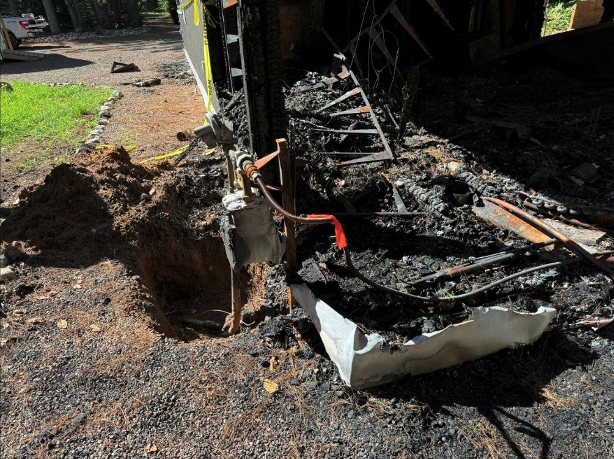
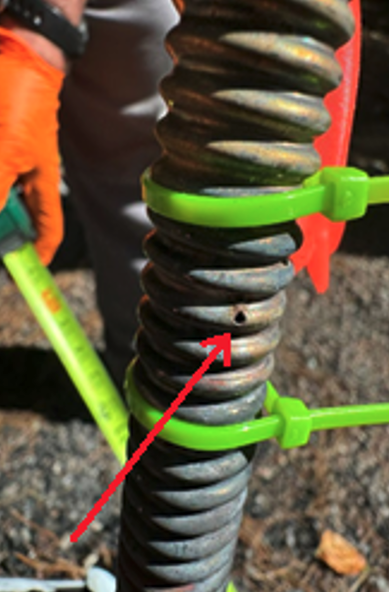
iv. Natural Gas (CSST) (1.9%) Gas corrugated stainless steel tubing (CSST) fires occurred most frequently during Quarter 3 of the year (78%). This timing aligns with Wisconsin’s stormiest months, when lightning activity is most common. During a nearby lightning strike, electrical energy can be introduced into a building’s grounding system. If CSST is not properly bonded, that energy can arc to the tubing, causing pinhole perforations that allow natural gas to escape and ignite. Prevention Tip: Ensure CSST systems are installed and bonded in accordance with manufacturer specifications and applicable codes. Periodic inspections of gas lines, particularly following severe storms, can help identify damage early. The following photographs show an unbonded CSST Gas pipe. A nearby lightning strike to a large tree traveled underground to this unbonded CSST pipe, creating a pinhole and allowing more pressurized gas to fuel the fire.
v. Explosion (0.9%) Fires originating from explosive events include pressurized containers, compressed gases, or combustible dust incidents. These events can cause rapid ignition and significant property damage, often compounding secondary fire hazards. Prevention Tip: Store pressurized containers safely, follow manufacturer instructions, and maintain proper housekeeping to prevent dust accumulation. vi. Dryer (0.9%) Fires caused by lint accumulation, overheating, or mechanical failure in clothes dryers can start behind walls or in confined spaces, making early detection difficult. Prevention Tip: Clean lint screens and ducts regularly, inspect venting systems, and avoid leaving dryers unattended while in use. h. Undetermined Fires A significant portion of the fires reviewed, approximately 15.6% of the total dataset, were classified as undetermined. While this percentage may appear high compared to other fire statistics, it reflects a conservative, evidence-based investigative approach rather than a lack of findings. In many fire investigations, there is pressure to assign a specific cause even when the physical evidence does not support a conclusion with reasonable certainty. This can result in causes being forced or inferred. An undetermined classification is used when fire damage, scene conditions, or the absence of reliable indicators prevents a cause from being identified without speculation. Common contributing factors include extensive fire damage, structural collapse, suppression activity, or multiple potential ignition sources within the area of origin. Classifying a fire as undetermined is not a deficiency in the investigation, but an acknowledgment of the limitations of the available evidence. This approach is consistent with accepted fire investigation principles and helps preserve the integrity of the data. By avoiding unsupported conclusions, the dataset more accurately reflects real-world fire conditions and prevents distortion of fire-cause trends that could otherwise mislead prevention efforts or public understanding. VI. Summary Fire has existed throughout the history of the universe. Fires caused by natural forces, or those that spread beyond human control, are often the most difficult to prevent. However, the fires investigated by MCA demonstrate a clear and consistent reality: the overwhelming majority are the result of human error. Across thousands of investigations, MCA has encountered countless victims, many injured or killed, due to their own actions or the negligence of others. Despite this, the true human impact of fire loss is not discussed as often as it should be, and national fire statistics are frequently incomplete, inconsistent, or misreported. Increasing education and awareness remains one of the most effective ways to reduce fire-related injuries, deaths, and losses. While some fires are unavoidable, many are preventable. Do-it-yourself projects can be beneficial and provide a sense of accomplishment, but they also carry significant risk when individuals exceed their level of training or experience. Licensed electricians should perform electrical work. Qualified professionals should complete gas and plumbing work. Attempting complex or code-regulated work without proper knowledge can introduce hidden hazards that may not present themselves until a fire occurs. When uncertainty exists, hiring licensed, insured, and properly qualified professionals is not only prudent; it is a critical life safety decision. Another often-overlooked consequence of fire loss is its impact beyond the immediate victim. MCA routinely assures fire victims that, if it has not already occurred, someone they have never met will step forward to help them. That assistance is a tangible outcome of fire victimization. An equally important, though less visible, result is that those who learn about a fire are often prompted to take proactive steps of their own, such as checking smoke alarms, reviewing escape plans, or reconsidering unsafe habits. In this way, every fire carries the potential to prevent the next one. Fire prevention is widely discussed, yet the most common and preventable causes identified in this article are often overlooked in broader conversations. The findings presented here are specific to Wisconsin, but the lack of a comprehensive, independent national fire cause database limits broader comparisons. Thousands of independent investigators and firms operate across the country, yet consistent reporting of fire causes, locations, and contributing factors remains limited. While many fire trends are similar across regions, others vary significantly based on climate, housing structures, and local practices. There is also a need for greater consistency and transparency among independent investigative firms. Too often, findings are used solely to support insurance claim determinations and are not systematically tracked or shared. For the sake of public safety, more firms must collect, analyze, and report their data in a way that enables meaningful comparisons with public agencies and law enforcement. Far too many causes of fire loss remain underreported or undocumented. MCA hopes this article not only provides useful insights for insurers, adjusters, and professionals but also serves as a practical resource for the general public. Increased awareness, informed decision-making, and attention to everyday hazards can save property and, more importantly, lives. Author Biography: Don VanOss is the owner of Midwest Consulting and Associates and a Certified Fire and Explosion Investigator with more than twenty years of experience specializing in origin and cause investigations. He holds a bachelor’s degree in criminal justice and a master’s degree in business, with an emphasis in Organizational Leadership and Quality. Based in the Fox Valley region of Wisconsin and the Upper Peninsula of Michigan, Don has conducted more than 4,000 fire investigations throughout his career, encompassing both first- and third-party losses. Before founding his firm, he served as a Special Investigations Unit (SIU) Manager, investigator, and loss-analysis consultant, during which time he developed a comprehensive, methodical approach to complex fire investigations. [1] Consumers can visit www.cpsc.gov to cross-reference their dehumidifier with the published recall information regarding fire and electrical failures. |